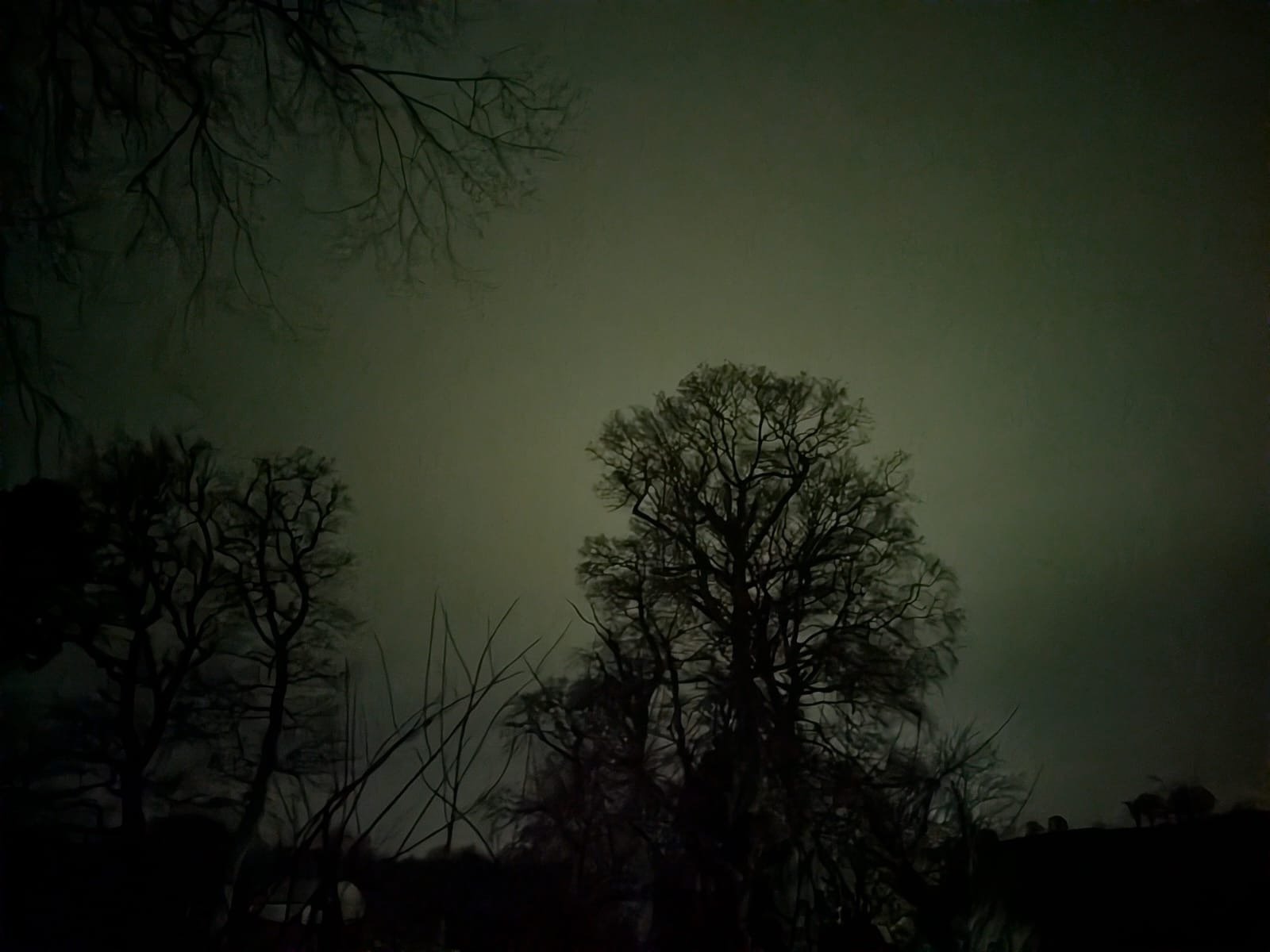

Soft atmospheric light filtering through trees at night, with subtle green tones from the Northern Lights in the sky, photographed in Northern Ireland by R Sefton
At first glance, this image shows atmospheric light in the background, framed by trees in darkness. It may appear calm, mysterious, or even unsettling, depending on how you experience it. What we initially see is often shaped by our own perceptions, memories, and emotional associations.
With additional context, the image takes on more depth. The contrast between light and dark is created by the Northern Lights and taken in the UK during January. Knowing this may subtly change how the image feels or how you interpret it. You might notice a sense of wonder rather than unease, or find that the darkness feels less threatening when understood as part of a natural phenomenon.
This shift illustrates how first impressions are frequently limited. We respond quickly, drawing on what we already know, fear, expect, or value. Perhaps the darkness feels ominous to you, or perhaps you are drawn to the composition because you have experience with photography and notice the framing, balance, or use of light. None of these responses are wrong; they simply reflect the lens through which you are viewing the image.
When we gain more information, we have the opportunity to add nuance to our understanding. We can question, refine, or gently change our initial thoughts if doing so feels helpful. This does not mean criticising ourselves for what we did not know at first. Rather, it involves allowing space for uncertainty and acknowledging that our understanding can evolve over time.
Maya Angelou captures this process clearly in her well-known words: “Do the best you can until you know better. Then when you know better, do better.” In therapy, this principle often applies to how we understand ourselves. Many people come to therapy noticing patterns, reactions, or beliefs that once served a purpose but may now feel limiting or confusing.
If you recognise a wish to understand yourself at greater depth, I offer a therapeutic space grounded in acceptance and without judgement. Drawing on cognitive and existential approaches, I support clients in exploring perception, meaning, and choice, helping them develop a clearer and more compassionate understanding of themselves and their experiences.
Email counselling@talktherapywithclaire.org to enquire about availability of online therapy sessions.
Leave a Reply